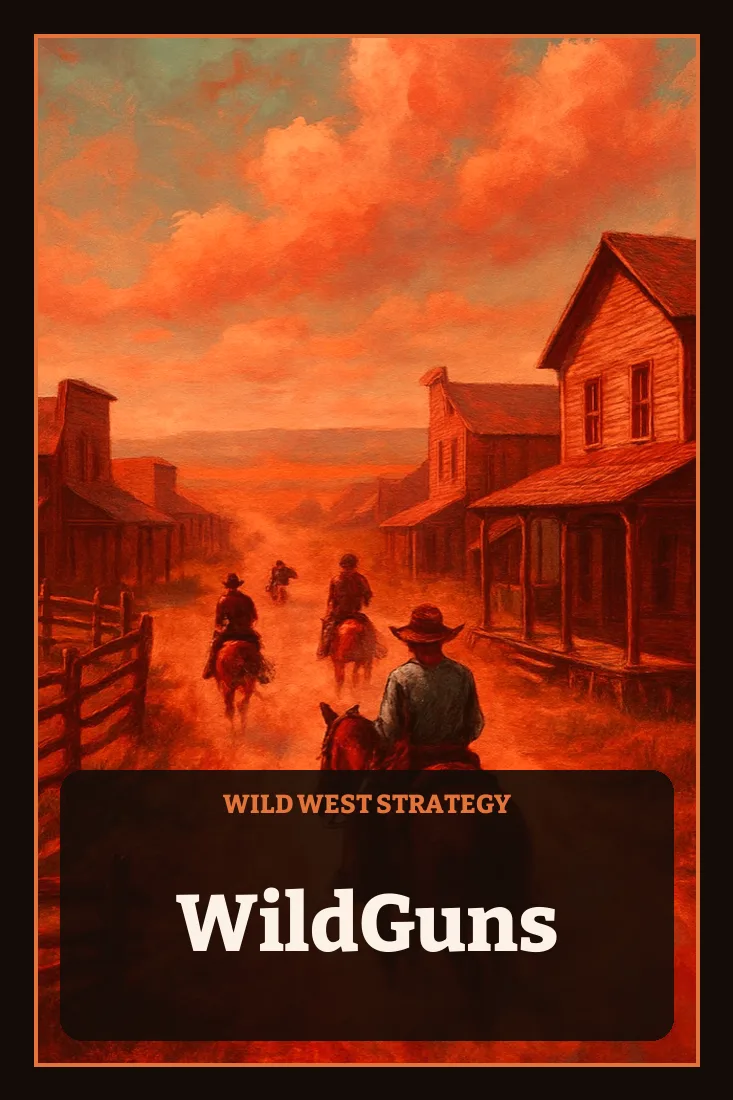
WildGuns has an unusual history for a game on this shelf. It is not a title that has run without a break: Gameforge closed it, listened to years of requests from former players, and relaunched it worldwide on 24 March 2026. Every server opened as a fresh start, with nothing carried over from the old days. For a newcomer, that changes everything about how welcoming a strategy game can feel.
It is also the one game here that is not really about a single character. You pick a nation, found a camp on the prairie and grow it into a settlement with an army behind it. We played from the relaunch window onward, through the scramble of the opening weeks and into the slower politics of alliances, and found a sturdy, thoughtful frontier strategy game that rewards a planner’s mind.
Three nations, three ways to hold the prairie
The first decision is which of three rival nations you join: Native Americans, Cowboys or Mexicans. Each has its own strengths, its own play style and its own unit paths, researched through a nation-specific Academy. This is a choice with long consequences, because it shapes the army you can build and therefore the kind of neighbour you will be.
We liked that none of the three felt like a trap. Each offers a coherent way to play, and the differences show up in planning rather than in a single overpowered trick. If you are unsure, pick the one whose style sounds most like you, whether that is aggressive expansion or careful defence, and let your alliance fill the gaps in your army.
Wood, clay, iron and food
Four raw materials drive everything. Wood, clay, iron and food feed your buildings, your troops and your research, and the early game is a pleasant puzzle of keeping all four flowing without letting one starve the rest. Set up your camp, gather what the land offers and lead your people through the perils of the frontier, as Gameforge puts it, and you have the whole first week.
As the camp grows, so do your ambitions. You can found new settlements or overtake rivals to expand your influence, and the map slowly fills with the colours of active players and alliances. Building queues and research timers mean the game tolerates short visits well, though the opening scramble rewards anyone who can log in regularly to keep everything busy.
Raids, reinforcements and the alliance table
Military play gives you three main tools: raids for quick plunder, full assaults to break a rival, and reinforcements to protect allies. The interesting part is not any single attack but the timing and coordination around it. A raid that arrives while a neighbour is offline, or reinforcements that land just in time, can decide the shape of a whole region.
That is why alliances matter so much. Diplomacy is built into the game, and the strongest players we met were the ones who negotiated well, not just the ones who built fastest. An artifact system adds time-limited buffs and debuffs that can tilt regional power, giving alliances something to fight over beyond territory. Gameforge also opened an official Discord for the relaunch, and it has become a busy meeting place.
What a strategy game asks of you
WildGuns is less forgiving of absence than the timer RPGs on our shelf. Strategy games punish neglect, and a camp left alone for a long weekend can become someone else’s lunch. If your schedule is unpredictable, an active alliance is your best protection, but you should still expect the game to tug at your sleeve more often than Tanoth or Gladiatus would.
It also offers no single hero to grow attached to, which may disappoint readers who came for an RPG. What it offers instead is a living map and real decisions with real neighbours. Because the relaunched servers are still young, a free player who learns quickly can matter here in a way that is rare in older browser games, and that is the main reason we rate its fairness highly.
Greenhorn week in WildGuns, day by day
- Choose your nation by the play style it describes, then read its Academy research path before building.
- Keep all four materials flowing; a camp short of food or iron stalls everything else.
- Join an alliance in your first days and learn who your neighbours are before they learn about you.
- Use raids sparingly early on, and keep enough defence at home for the hours you are offline.
- Drop in on the official Discord to hear how your server’s alliances are lining up.
What kept us logging in
- Fresh-start servers give newcomers a genuinely level field.
- Three nations with distinct unit paths and play styles.
- Alliance diplomacy makes the map feel alive.
- Four-material economy is easy to learn and hard to perfect.
What wore thin
- No single hero to grow attached to.
- Absence is punished more than in the timer RPGs.
- Opening weeks reward players who can log in often.
The player WildGuns was built for
Strategy-minded players who enjoy managing an economy, reading a map and working with an alliance. If you have always been put off browser strategy games by veterans with a ten-year lead, the relaunched WildGuns servers are the best chance you will get to start on equal terms.
Where we landed on WildGuns
WildGuns is a solid frontier strategy game with a rare advantage: since its March 2026 relaunch, everyone started level. Three distinct nations, a clear four-material economy and genuine alliance politics give it real depth. It ranks last only because it is a strategy game on an RPG shelf, and because it asks for steadier attention than its neighbours. Planners should not hesitate.