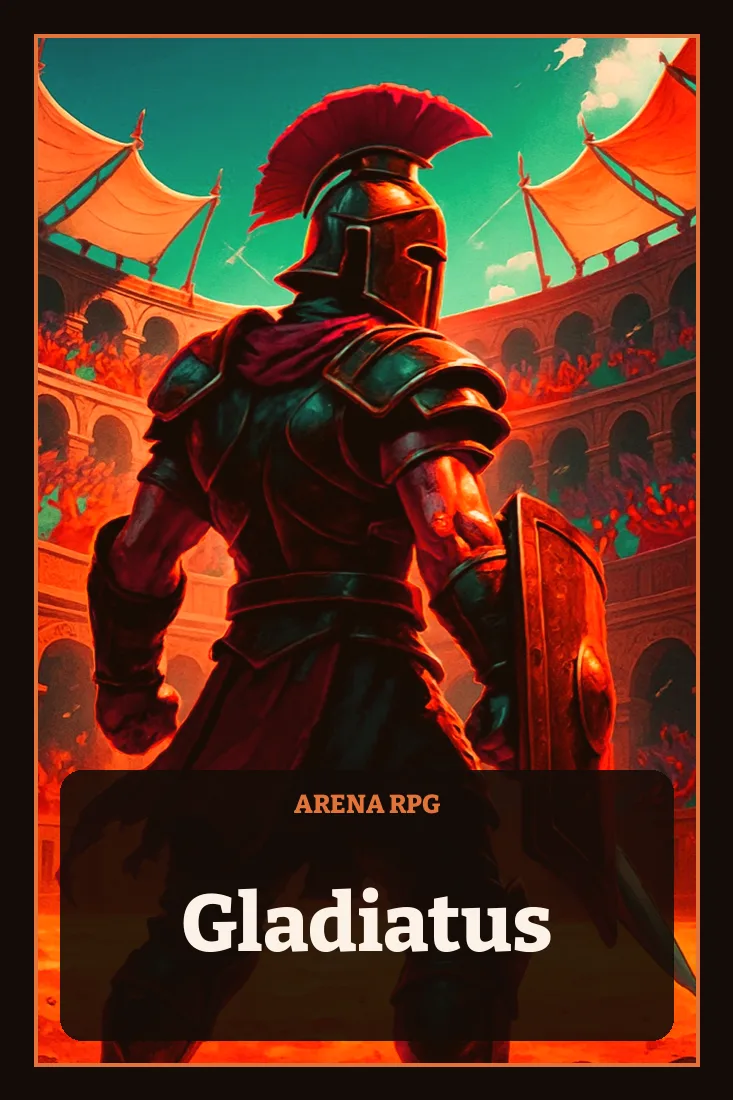
Gladiatus is set in a Rome where history, legend and a little fantasy share the same sand. You are a gladiator with a name, a few attributes and a modest kit, and the game’s promise is simple: fight your way up. Expeditions send you into the provinces to face creatures, dungeons lead to tougher fights and better equipment, and the arena pits you against other players for standing and gold.
Almost everything runs on timers that tick down in real time. That shapes the whole experience. You do not sit with Gladiatus for an evening; you visit it, make a few choices, and leave it to work. Over several weeks that rhythm turned out to be its greatest strength. Few games on our shelf fit so neatly into a busy weekday, and few make five minutes feel this productive.
Expeditions on the clock
Expeditions are the backbone of a Gladiatus day. You choose a location, choose an opponent and send your gladiator off. The fight resolves, the rewards land, and a cooldown begins before you can go again. Gameforge promises over a hundred distinct opponents across expeditions and dungeons, each with its own strengths and weaknesses, and learning which ones your build can handle is the first real skill the game teaches.
The pleasure is in the small optimizations. Which enemy gives the best return for the risk at your current level? Is it time to move to a harder region? Should you save your health for the arena? These are quick decisions, but they accumulate, and after a couple of weeks our gladiator’s growth felt earned rather than handed out.
Dungeons and the thousand-item rack
Dungeons are where the better gear lives. They string fights together and reward you for clearing them, and they quickly become the reason to check in. Gameforge advertises over a thousand items, and the inventory screen shows it: weapons, armour, rings and more, each nudging your attributes in a different direction. Comparing two helmets becomes a genuine question about what kind of fighter you are building.
We enjoyed this part most. Gladiatus makes gear feel like the character sheet you actually carry, and a lucky find in a dungeon can reshape your plans for the next week. The player market adds a second route, letting you buy what the dungeons will not give you and sell what you have outgrown, which keeps the economy busy on every server we tried.
The arena: real names on the other side
The arena is where Gladiatus becomes social, in a combative sort of way. You challenge other players and the fight resolves automatically based on your gladiators’ stats and equipment. There is no reflex involved, so the battle is really decided in the days before it, in your choice of gear and your attribute spending. Watching a carefully planned build beat someone higher on the ranking is quietly thrilling.
The flip side is that veterans with years of gear sit at the top and stay there. A free player can climb steadily, and we did, but the upper reaches of an established server move slowly, and the shop’s speed-ups are always visible. Guilds help: they let you combine strength with friends and give the arena a team flavour beyond your own record.
Small sessions, honest limits
If you want a deep story or a world to explore, Gladiatus is not that game. Its Rome is a backdrop for a loop of timers, fights and gear, and the menus are workmanlike rather than evocative. Those looking for an evening’s immersion will find themselves done in ten minutes and wondering what to do next.
But judged on what it sets out to do, it is excellent. The loop is clear, the rewards are frequent, and the timers respect your day instead of demanding it. On a cold January morning with half an hour before the bus, sending our gladiator out and checking the arena was a ritual we came to look forward to, and that is no small achievement for a browser game.
Greenhorn week in Gladiatus, day by day
- Run expeditions against the weakest local opponents until you understand how your attributes affect each fight.
- Check in morning and evening so your expedition and arena timers rarely sit idle.
- Try your first dungeon as soon as it opens, and compare every new item against your current kit.
- Challenge arena opponents near your level rather than the famous names at the top.
- Join a guild by the end of the week to share advice and combine strength.
What kept us logging in
- Short timed sessions fit around work and family with no friction.
- A huge item pool makes gear comparisons genuinely interesting.
- Arena fights reward planning done days in advance.
- Dungeons give a clear goal for every week.
What wore thin
- Long-established veterans dominate the top of the arena ranking.
- Little to do once your timers are running.
- Rome is more backdrop than setting.
The player Gladiatus was built for
Players with full days who still want a character to grow. If you can spare a few minutes at breakfast, lunch and bedtime, and you enjoy comparing gear and climbing a ranking against real people, Gladiatus offers more steady satisfaction per minute than anything else on our shelf.
Where we landed on Gladiatus
Gladiatus is the most efficient game we reviewed: every short visit moves your gladiator forward, and its expeditions, dungeons and arena make a tidy, rewarding loop. It lacks the depth of The West and the warmth of a Fallen Sword guild, and veterans hold the arena summit tightly. As a daily companion for busy people, though, it is hard to beat, and it fully earns its third place.