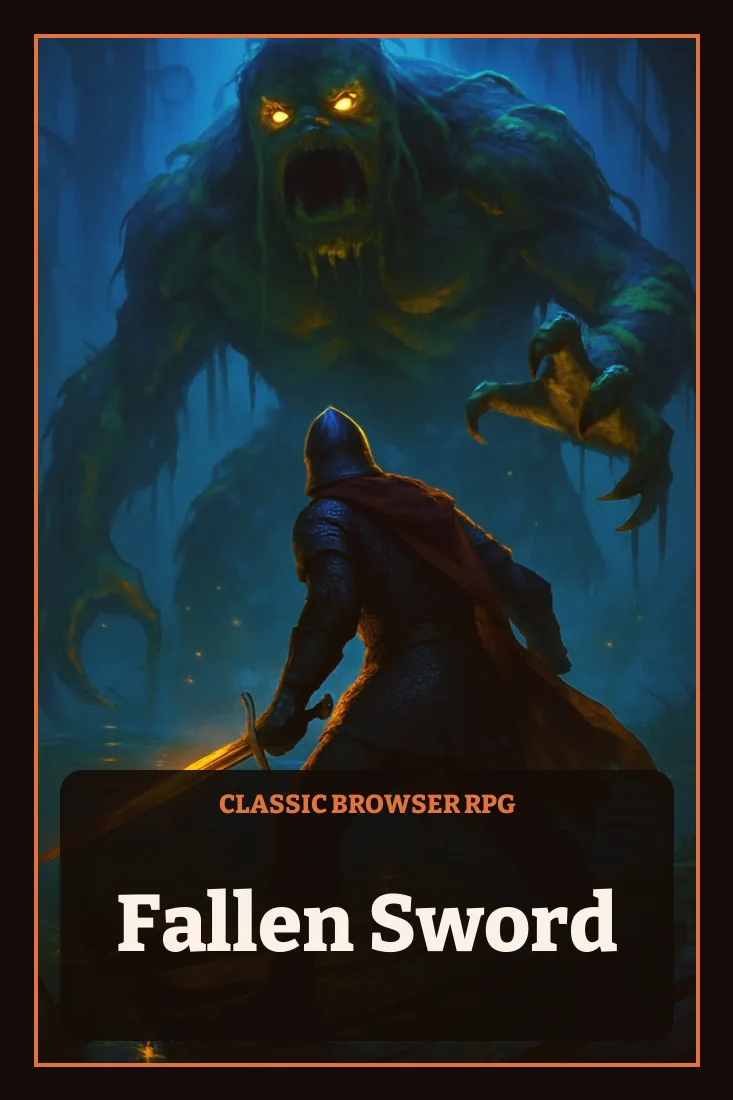
Fallen Sword describes itself as having an old-school MUD feel, and the description is honest. You walk a hero across the realms of Erildath, find creatures, fight them, collect what they drop and move on to the next realm once the current one stops teaching you anything. The combat resolves quickly. The decisions are mostly about where to spend your stamina, which is the precious resource the whole game orbits around.
That could be tedious, and for some readers it will be. What lifts it is everything around the hunt. Other players cast buffs on you that change how much a session yields, guilds pool equipment and help, and an auction house turns your drops into a tiny economy. We played for several weeks and kept finding new layers, which is what a game advertising over a thousand levels of content ought to deliver.
Stamina is the currency of every evening
Each fight costs stamina, and stamina returns over time. So a Fallen Sword session is a planning exercise before it is a fighting one. Where are the creatures that give the best experience for my level? Is it worth walking further for them? Should I spend everything now or wait until a friend can buff me? The community wiki calls stamina the most prized possession in the game, and after a fortnight we agreed.
This rhythm suits a particular player very well. You can sit down for twenty minutes, burn a full bar in a carefully chosen realm and log off having made visible progress. You can also save up and spend a long weekend evening hunting with every bonus active. It is less forgiving if you want to play for hours on a whim, because the bar empties and the game politely asks you to come back later.
Buffs, guilds and the favour economy
The most distinctive thing about Fallen Sword is how much your hunting depends on other people. Players learn skills that can be cast on others, and those buffs last for a limited time, boosting experience, gold or efficiency. Seasoned hunters treat them as essential. Getting a good set before a big session, and then actually using your stamina while they last, is part of the etiquette.
Guilds sit at the centre of this. Members share buffs and gear, some specialize in farming plants and making potions, and a good guild makes the long climb feel communal rather than lonely. We joined one in our first week and the difference was immediate: advice, a borrowed weapon, a buff when we needed it. Fallen Sword is technically playable alone, but it is far better with company.
Crafting, trading and the auction house
Alongside hunting, Fallen Sword gives you crafting professions such as blacksmithing and alchemy, and a trading system that includes an auction house. That matters more than it sounds. Items you have no use for become something another player wants, and the gold you earn can buy the upgrade your current realm is demanding. It turns drops into decisions instead of clutter.
We also found a small, lively market in buffs, where players with the right skills offer them to others. It gave our characters a second role beyond hunter: someone who could be useful to strangers. For a game this focused on individual progress, that social texture is the thing that kept us logging in on evenings when the next realm felt like a long walk.
Legendary creatures and the long tail
Every so often a Legendary creature demands a group, and dungeons offer their own runs. These are the moments where Fallen Sword feels most like a shared adventure, with guildmates coordinating to bring down something none of them could manage solo. Community events add variety too, which helps a game whose core loop rarely changes.
The trade-off is that the core loop rarely changes. The canvas presentation is tidy and readable rather than spectacular, and if hunting creatures to fill an experience bar does not appeal after the first week, nothing later will change your mind. If it does appeal, the sheer length of the road is a gift. Hunted Cow also offers a mobile app, which makes a quick stamina burn on the GO train entirely possible.
Greenhorn week in Fallen Sword, day by day
- Read the starting realms carefully and hunt creatures close to your level, where stamina buys the most experience.
- Join an active guild early; shared buffs and gear change the pace of your first fortnight.
- Learn when your stamina refills and plan one focused hunt around that rhythm each day.
- Ask for a basic buff set before a longer session, then spend your stamina while it lasts.
- Browse the auction house before buying gear from shops, and list drops you will never use.
What kept us logging in
- Stamina makes every session a small, satisfying planning puzzle.
- Player-cast buffs give strangers real reasons to help one another.
- Over a thousand levels of content means the road genuinely does not end.
- A mobile app keeps short hunts possible away from the desk.
What wore thin
- The core hunt barely changes from the first realm to the hundredth.
- Solo play without buffs feels noticeably slower than guild play.
- Presentation is functional rather than atmospheric.
The player Fallen Sword was built for
Patient levellers who enjoy watching numbers climb steadily, and who would rather belong to a helpful guild than chase rankings. If the phrase old-school MUD makes you smile rather than wince, and you like having a game you can open for twenty minutes almost anywhere, Fallen Sword will keep you busy for a very long time.
Where we landed on Fallen Sword
Fallen Sword knows exactly what it is and never pretends otherwise. The hunt is simple, but stamina, buffs and a busy auction house make every session a set of small, smart choices, and its guilds give the long climb real warmth. It ranks second because its loop is narrower than The West’s, not because it does that loop any less well. For the right player it is a home for years.